
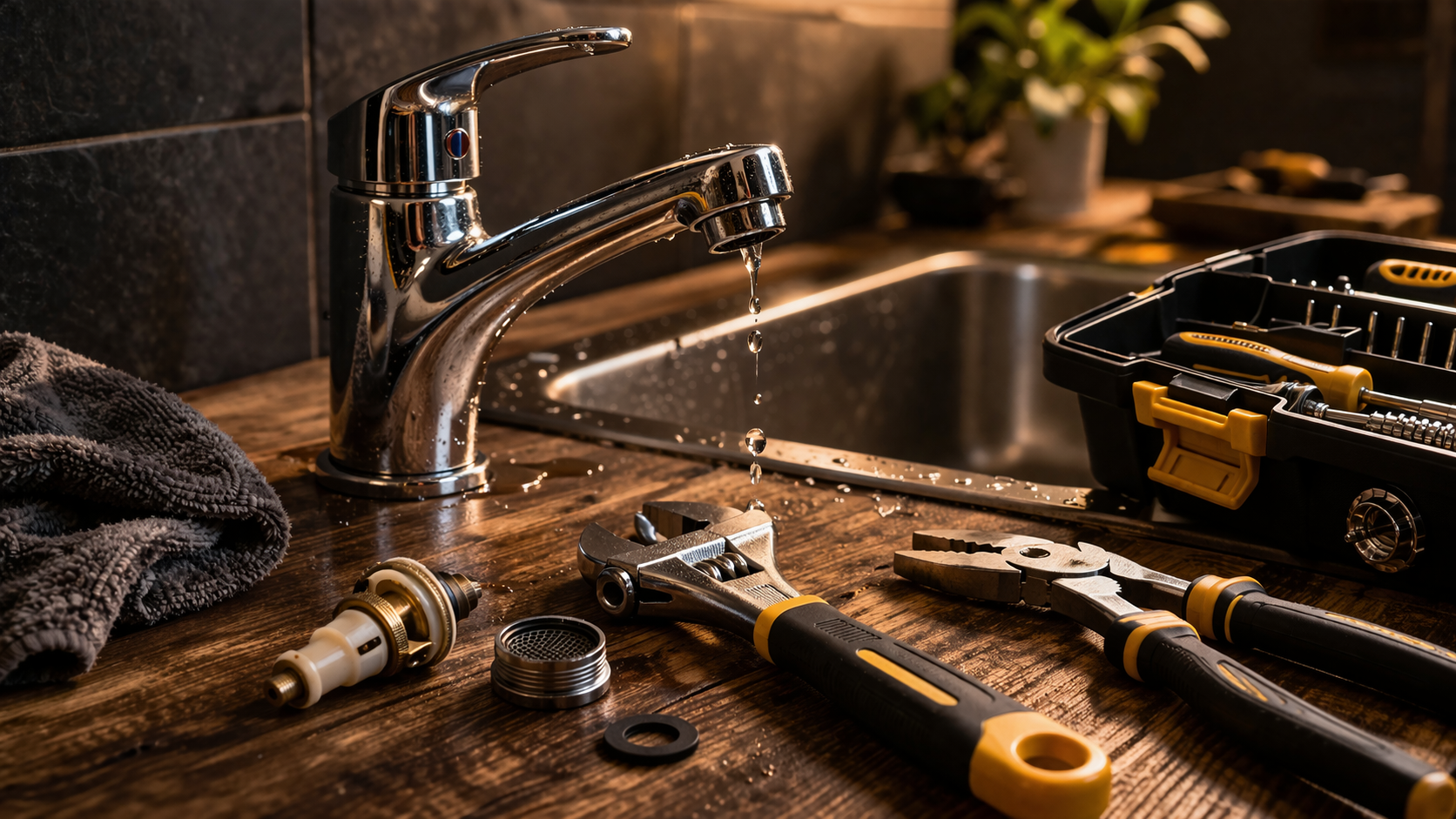
How to Fix a Leaking Tap Yourself — Beginner’s DIY Guide
A leaking tap is one of the most common home maintenance problems in Australia — and in many cases, fixing a leaking tap yourself is a straightforward DIY job that takes less than an hour and costs under $20 in parts. Left unrepaired, a single dripping tap can waste thousands of litres of water per year and add meaningfully to your water bill.
How to Fix a Leaking Tap in Australia — What You Need to Know First
Before you grab a wrench, there are two important things to understand about DIY plumbing in Australia:
- What you can legally do yourself: In Australia, replacing tap washers, O-rings, and ceramic disc cartridges is generally considered maintenance work that homeowners can legally carry out themselves. This varies slightly by state — check your state’s plumbing regulations before starting. In NSW, minor tap maintenance is permitted as DIY work under the NSW Fair Trading plumbing guidelines.
- When to call a licensed plumber: If the leak is in the pipes behind the wall, if the tap body itself is cracked or corroded, or if you encounter anything involving gas or hot water systems — stop and call a licensed plumber. In Australia, a licensed plumber must carry out all work beyond basic tap maintenance.
Tools and Materials You’ll Need
- Adjustable wrench or shifter
- Flathead and Phillips screwdrivers
- Replacement tap washer or ceramic disc cartridge (match to your tap type — available at Bunnings for $5–$15)
- Replacement O-ring (if needed)
- Plumber’s grease
- Cloth or towel for water spillage
- Bucket (optional)
Step-by-Step: How to Fix a Leaking Tap
Step 1 — Turn Off the Water Supply
Before touching anything, turn off the water supply to the tap. Most Australian homes have an isolation valve under the sink or basin — turn it clockwise to close. If there’s no isolation valve, turn off the main water supply for the property. Turn the tap on to release any remaining pressure in the line.
Step 2 — Remove the Tap Handle
Most Australian tap handles are held in place by a screw hidden under a decorative cap. Pry off the cap with a flathead screwdriver, undo the screw, then lift or pull the handle free. Some handles are threaded directly — unscrew anticlockwise.
Step 3 — Remove the Packing Nut
With the handle removed, you’ll see a packing nut (also called a gland nut). Use your adjustable wrench to unscrew it anticlockwise. Hold the tap body firmly with your other hand — don’t let the tap body rotate.
Step 4 — Replace the Washer or Ceramic Disc
Once the packing nut is removed, pull out the spindle. At the bottom of the spindle you’ll find either a rubber washer held by a brass screw, or a ceramic disc cartridge.
- Rubber washer: Unscrew the brass screw, remove the old washer, fit the new one. Make sure it’s the correct size — take the old washer to Bunnings to match it exactly.
- Ceramic disc cartridge: Pull the cartridge out, take it to a hardware store to match, and press the new one in. Ceramic disc taps are common in Australian homes built after the 1990s.
Step 5 — Check the O-Ring
While you have the tap apart, inspect the O-ring on the spindle. If it’s cracked, flattened, or brittle — replace it. A worn O-ring is often the cause of leaks around the base of the tap handle rather than from the spout.
Step 6 — Reassemble and Test
Apply a light coat of plumber’s grease to the spindle threads and O-ring before reassembling. Reinstall the spindle, hand-tighten the packing nut, then snug it with the wrench — don’t overtighten. Refit the handle and decorative cap. Turn the water supply back on slowly and test for leaks. Run the tap fully open and closed a few times to seat the new washer.
If the Leak Persists
If the tap still leaks after replacing the washer and O-ring, the tap seat — the brass or stainless seat inside the tap body that the washer presses against — may be damaged or corroded. A tap seat can be reground with a tap reseating tool ($20–$40 at Bunnings), but this is a more advanced repair. If the seat is too far gone, the tap body needs replacing — at this point, it’s worth calling a licensed plumber.
For more information on water-efficient fixtures and the impact of leaking taps on household water consumption, see WaterRating.gov.au, the Australian Government’s water efficiency labelling scheme.
Disclaimer: This guide is for general informational purposes only. Always check the plumbing regulations in your state before undertaking DIY plumbing work. When in doubt, engage a licensed plumber.